
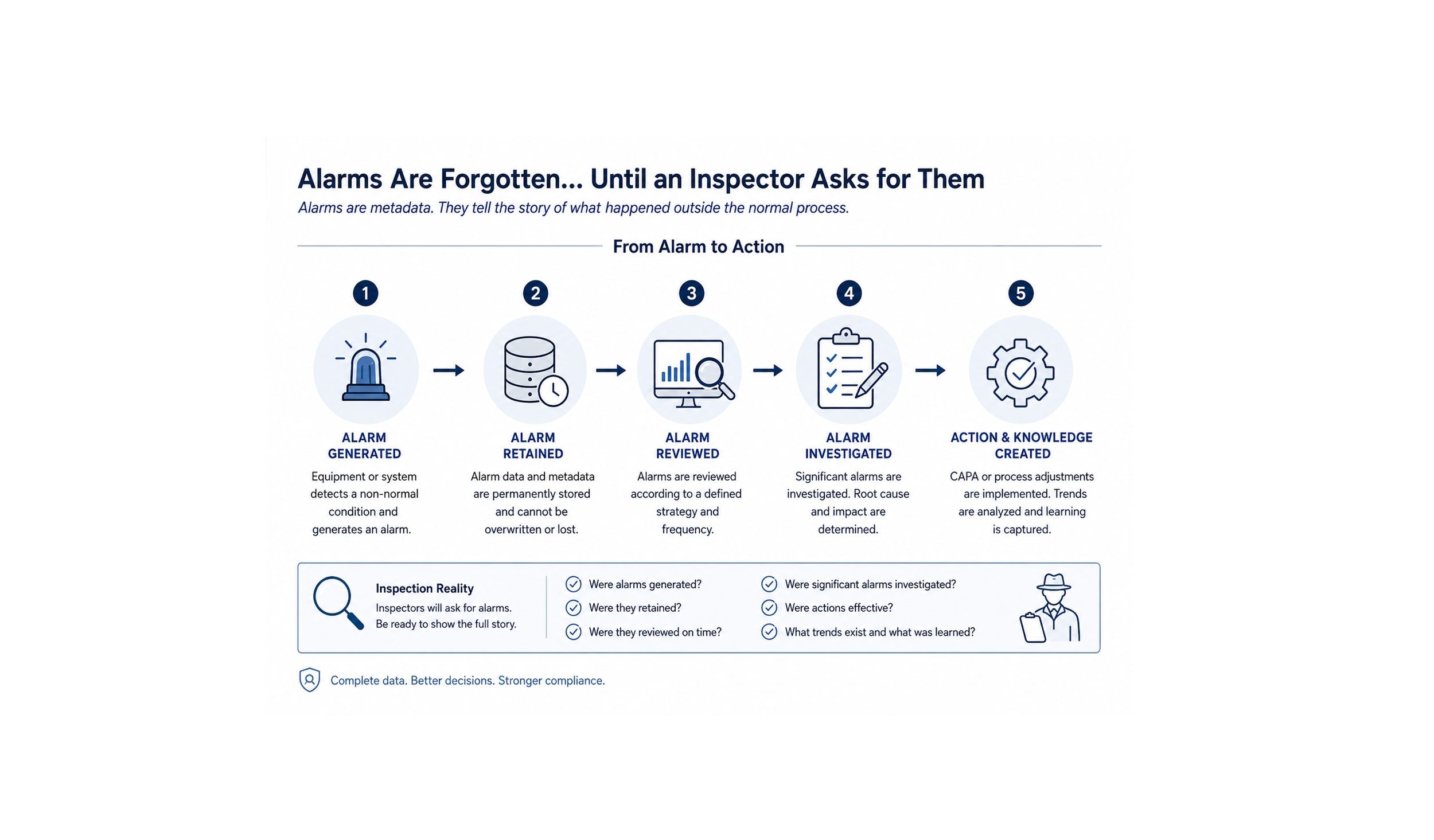
Alarms Are Forgotten… Until an Inspector Asks for Them
Alarms are much more than technical notifications—they are valuable metadata. Increasingly, FDA inspectors review alarm histories to understand how abnormal situations are managed and whether complete data are retained. This blog explains why alarms deserve a central place in your Data Governance program and provides practical recommendations supported by recent regulatory observations.
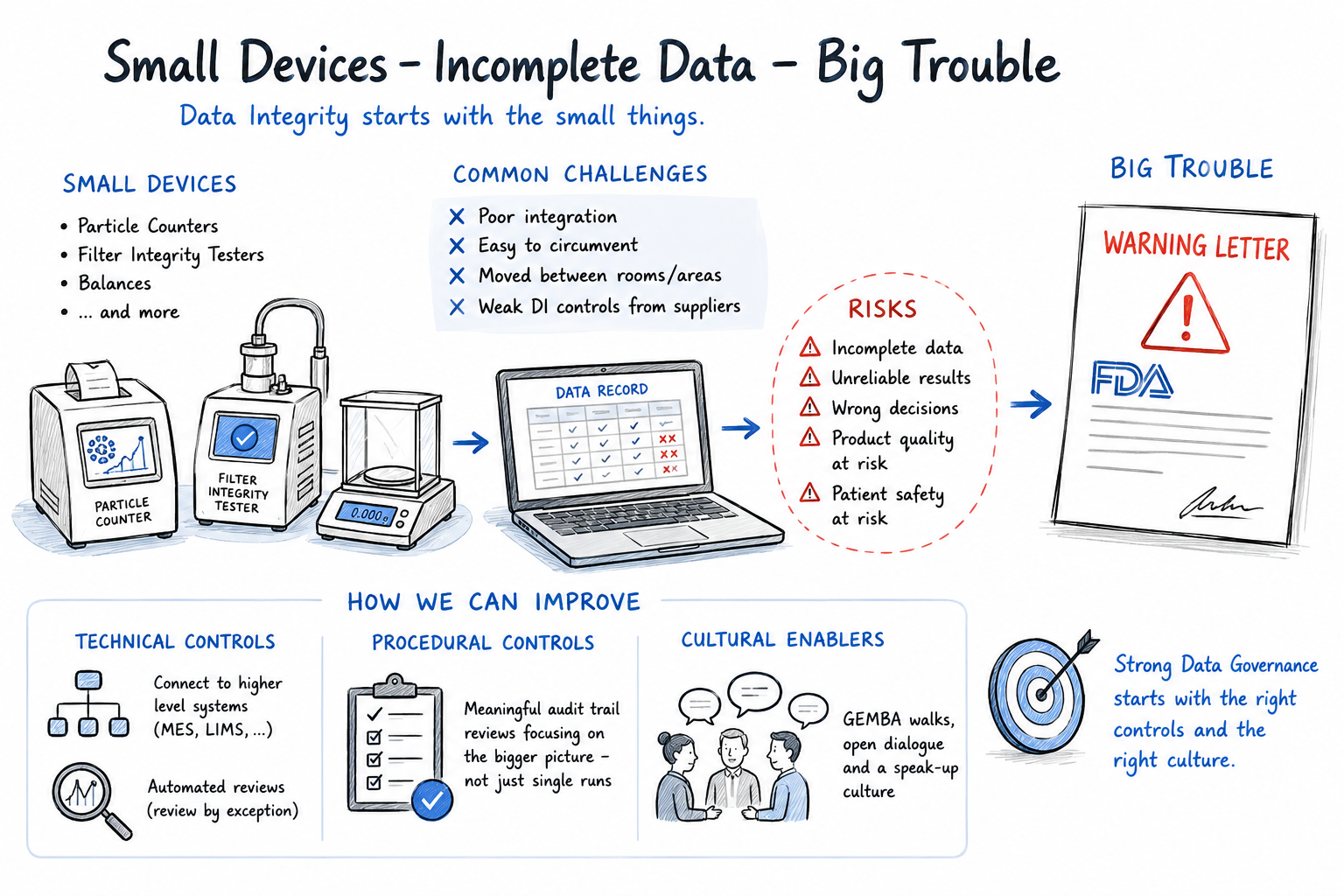
Small Devices – Incomplete Data – Big Trouble
Small stand-alone devices such as particle counters, balances, and filter integrity testers are often overlooked—but they can reveal significant weaknesses in a company's Data Governance and Data Integrity program. Inspired by a recent FDA Warning Letter, this article explores common risks and practical technical, procedural, and cultural measures to strengthen data integrity.
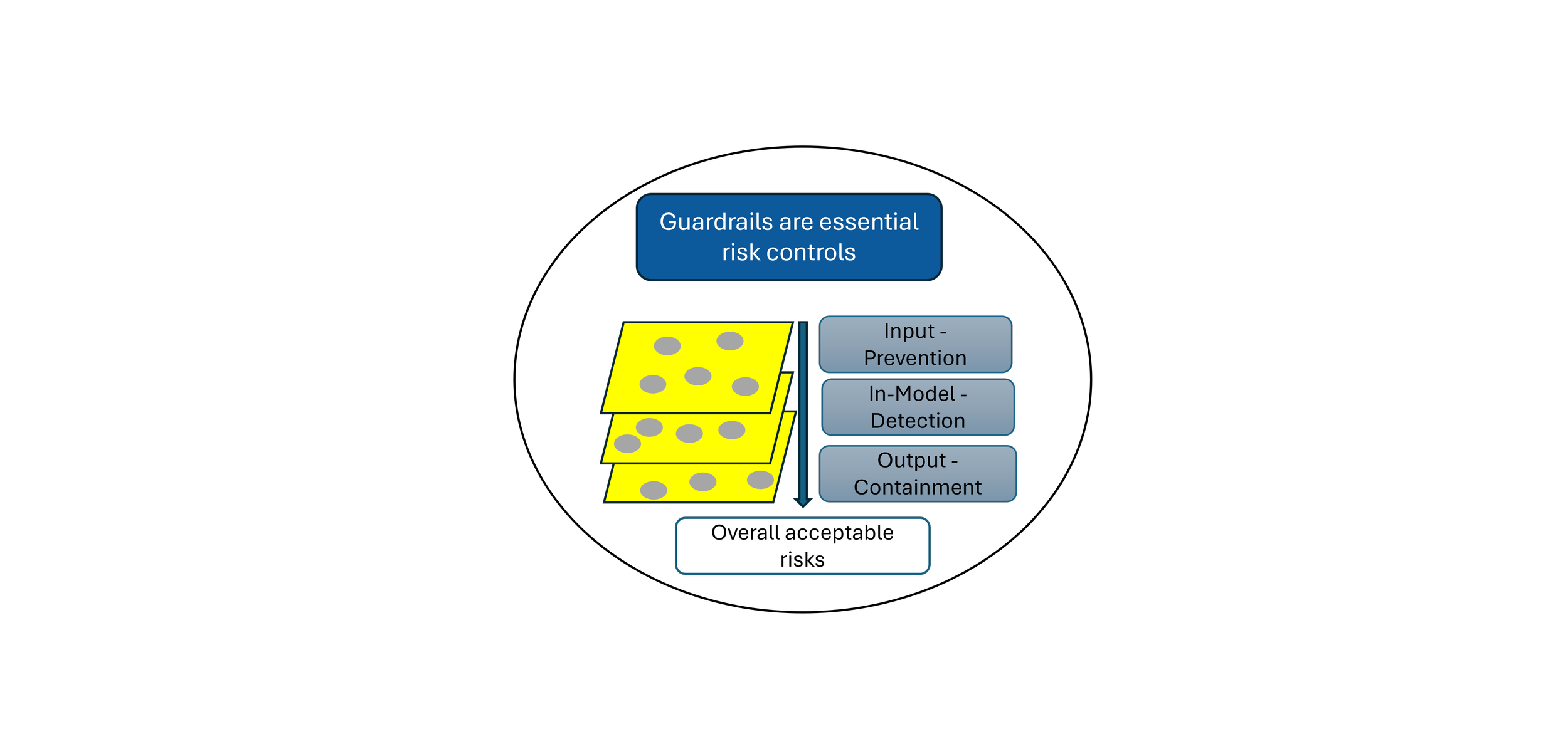
Implementing AI/ML in GMP: Guardrails as Risk Controls
What are guardrails, and why are they central to AI in GMP? This article explores how technical controls such as input, in-model and output guardrails can reduce AI/ML risks, based on key discussions from the EMA Annex 22 Multistakeholder Workshop and ICH Q9(R1).
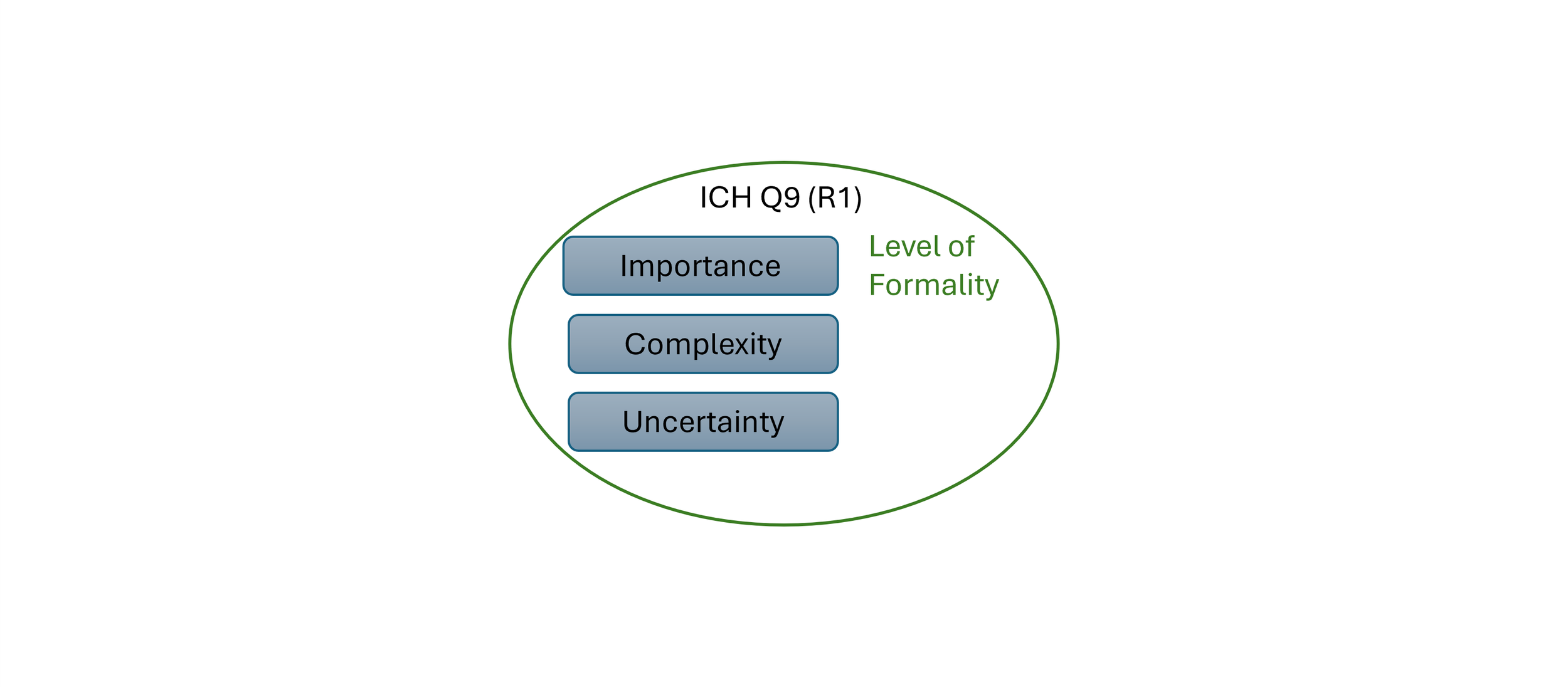
Implementing AI/ML in GMP: Applying ICH Q9(R1) to GenAI
How can ICH Q9(R1) guide the implementation of AI/ML in GMP? This article explores how uncertainty, importance and complexity can be used to determine the appropriate validation effort for AI systems, based on key discussions from the EMA Annex 22 Workshop.
Reflections from the EMA Annex 22 Workshop
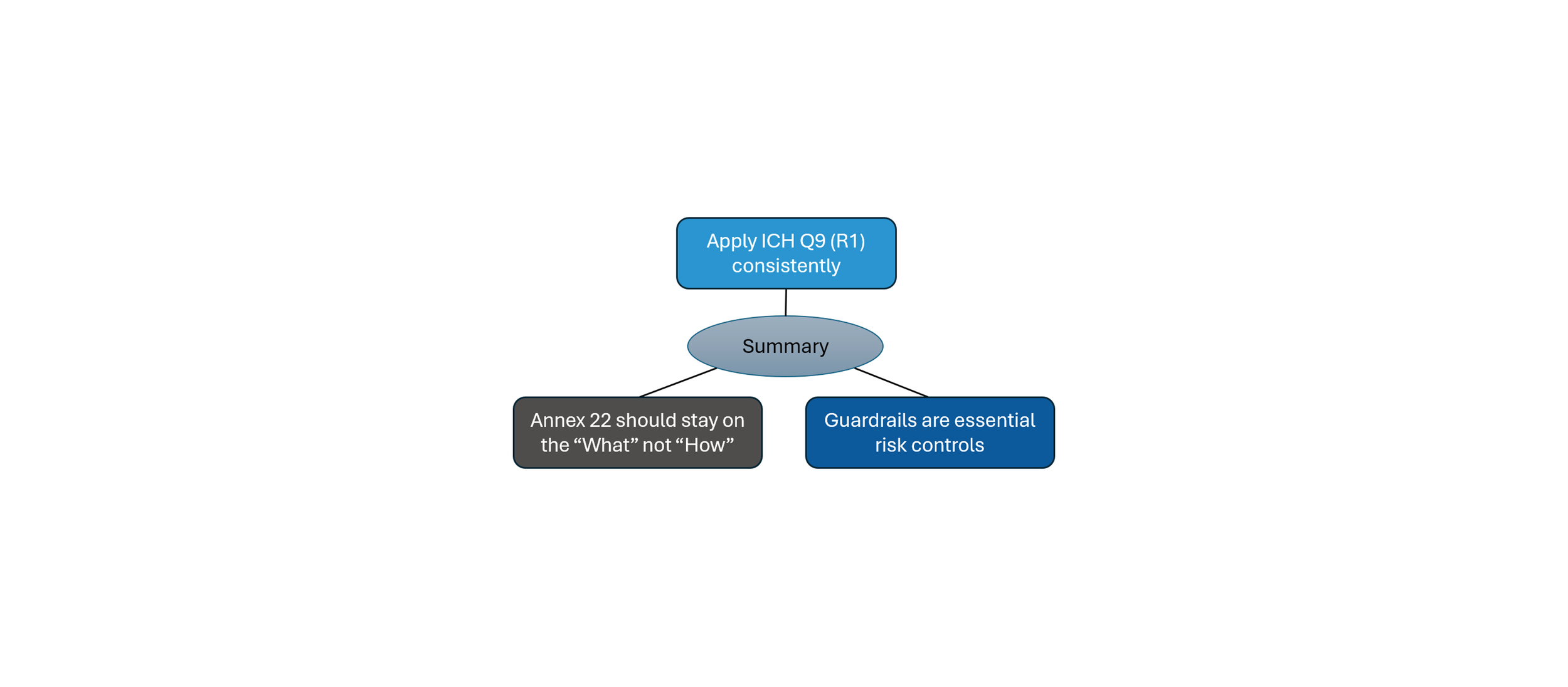
The EMA Annex 22 workshop on Artificial Intelligence provided an important opportunity for industry to discuss practical approaches for implementing AI in GMP. This article summarizes the key recommendations presented by industry, focusing on Quality Risk Management (ICH Q9(R1)), AI guardrails, and the practical use of Generative AI and Large Language Models in regulated pharmaceutical environments.